;Resize=(280,110) "Dove - Let’s Change Beauty logo")

WHAT IS EXCESSIVE SWEATING AND WHO DOES IT AFFECT?
Sweating excessively even when your body doesn't need cooling is a medical condition. It's called hyperhidrosis and it often shows up in areas like the underarms, hands, feet, or face; places where it can be especially noticeable in your day to day.
While you could feel like you’re the only one dealing with it, around 3% of Americans live with hyperhidrosis.¹
Some of the typical signs are:
- Sweating a lot while you are at rest
- Your daily activities are affected because of dripping sweat, like typing on a keyboard
- Your skin gets pale and peels because of the constant moisture
- You get jock itch or other skin infections because of the wetness
“Other folks may consider themselves as heavy sweaters, who do not have a medical condition, but are very aware of their sweating and look for extra protection from their antiperspirants,” says Unilever R&D scientist, Matt Annecharico.
EXCESSIVE SWEATING CAUSES
Excessive sweating can have several causes beyond medical conditions. Then there are factors like stress, hormones, and lifestyle habits that can also increase sweat levels.
Primary hyperhidrosis
Primary hyperhidrosis is caused by overactive nerve signals to the sweat glands, often affecting specific areas like the underarms, palms, face, or feet. If you tend to sweat heavily in certain spots while the rest of your body feels normal, this could be what’s behind it.
Secondary hyperhidrosis
Secondary hyperhidrosis happens when sweating is triggered by something else. This can include underlying health conditions, such as thyroid imbalances, diabetes, or infections. Even certain medications can cause excessive sweating.
Lifestyle Factors That Increase Sweating
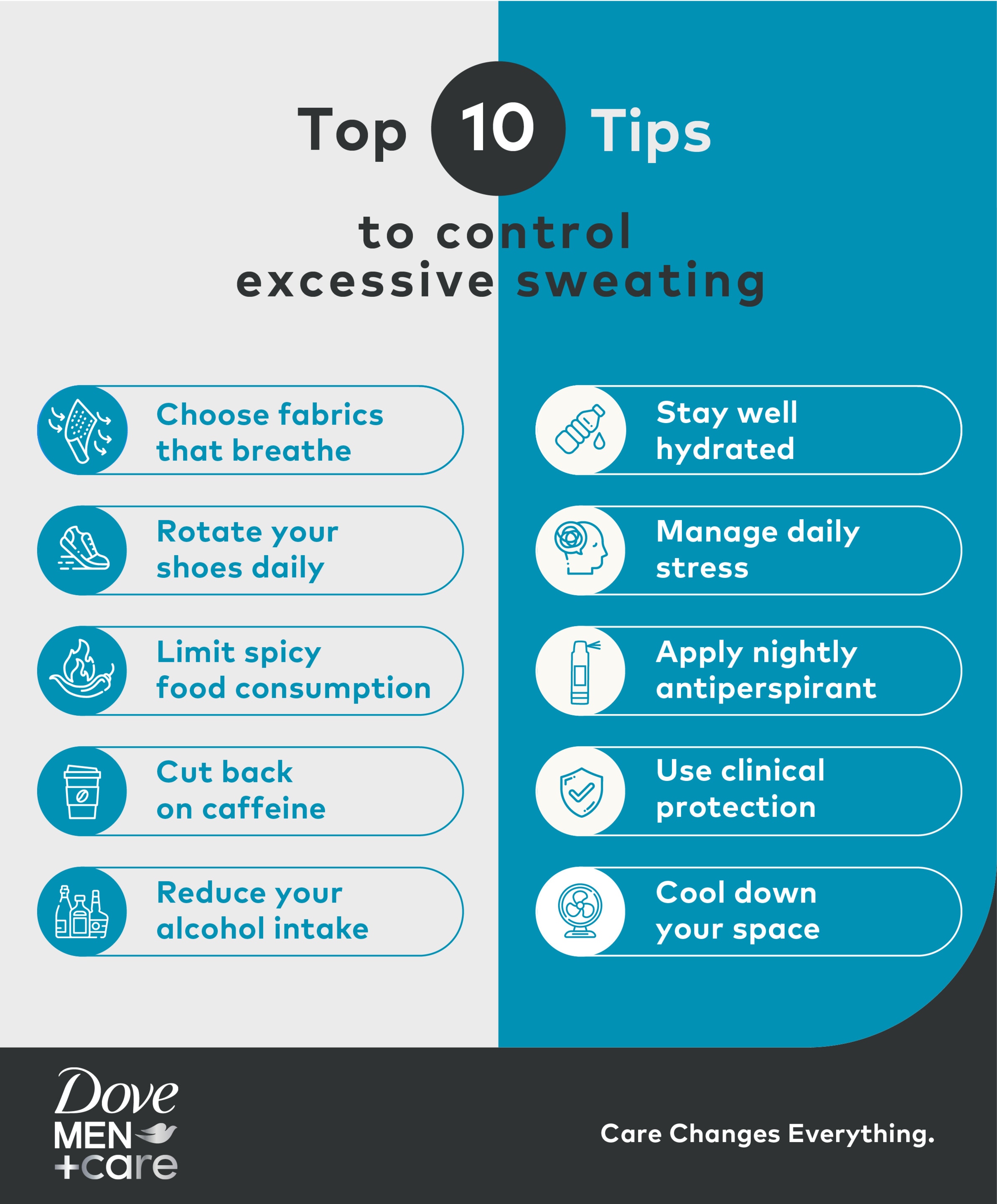
Sometimes your daily habits can play a role. Stress, caffeine, alcohol, and spicy foods can stimulate your sweat glands, while tight or synthetic clothing can trap heat and make sweating feel more intense.
Here are a few simple changes that can help with excessive sweating:
MANAGING EXCESSIVE SWEATING
If you’re dealing with excessive sweating, you need protection that covers both sweat and odor. Deodorants help manage odor, while antiperspirants reduce wetness. For excessive sweating, try clinical strength or prescription options. Applying these the right way also matters.
“The most effective way to apply an antiperspirant is in the evening before bed,” explains Matt. “This allows enough time for the antiperspirant gel plug to form in the sweat duct, as you move and sweat less during sleep.”
Look for clinical-strength antiperspirants containing 15–20% aluminum-based active ingredients. These formulas work at the source to help reduce sweat.
Dove Men+Care options like Clean Comfort Maximum Protection Antiperspirant Stick are designed to provide strong sweat and odor protection without compromising skin comfort.
WHEN ODOR LINGERS AFTER A SHOWER
Sweat alone doesn’t have a noticeable odor. The smell happens when bacteria on your skin break it down. If the bacteria aren’t fully cleared away, odor can linger even after a shower. Here's what you might be missing:
- You’re not using the right cleanser: Gentle, pH-balanced body washes help remove sweat, oil, and odor-causing bacteria more effectively.
- You’re rushing your routine: Quick rinses are not enough. Sweat-prone areas like your underarms need a bit more attention.
- Bacteria buildup on skin or hair: Underarm hair can trap sweat and bacteria, which may lead to lingering odor.
- Towels and clothing: If your towel or clothes aren’t clean, they can transfer odor back onto your skin.
- Skipping antiperspirant after showering: Applying a reliable antiperspirant to clean, dry skin helps control sweat before it starts, reducing the chance of odor coming back.
So, getting clean is step one. Keeping odor under control is about what you do after your shower. “Body odor can be affected by the food you eat, changing hormones during puberty, stress, and medications,” explains R&D Manager at Unilever, Jamie Regan. This means that even with a solid shower routine, odor can still show up if something else is behind it.
Supporting your routine with the right habits, like wearing breathable fabrics, managing stress, and using a reliable antiperspirant, can help you stay fresher for longer.
TREATMENTS FOR EXCESSIVE SWEATING
If your excessive sweating is severe, medical treatments can offer relief. But they’re usually only recommended if nothing else has made your condition more manageable, such as using clinical-strength antiperspirants.²
- Oral medications can help reduce sweat signals and may be useful for widespread sweating. But they can come with side effects, so it’s important to discuss this option with your doctor.
- Iontophoresis is a treatment often used for hands and feet. It's a mild electrical current sent through water that gradually reduces sweating, but you need regular sessions to maintain the results.
- Botox injections temporarily block the nerve signals that trigger sweating.
Always consult a medical practitioner about your concerns and treatment options.
FAQs
What causes excessive sweating?
Some common causes are overactive nerve signals, medical conditions or medications, hormonal changes, and stress.
How can I tell if my sweating is excessive?
If you sweat through your clothes, sweat when you’re not hot or active, or if it disrupts your day or confidence, it may be excessive.
When should I see a doctor about my sweating?
If sweating starts suddenly, happens at night, comes with fever, weight loss, chest pain, or other new symptoms, seek medical care. If it soaks your clothes regularly and is affecting your life, it's also a good idea to talk to your doctor.
What are the best ways to prevent body odor after showering?
Use an antibacterial cleanser, dry off thoroughly, apply antiperspirant to dry skin, wear breathable fabrics, and change your clothes and socks daily.
Are there options beyond clinical antiperspirants?
Yes. Botox, iontophoresis, oral medications, and, rarely, surgery can help. Check in with your doctor about the right options for you.
Excessive sweating in men is common, but it can affect your daily activities and confidence. Whether it’s an ongoing challenge or triggered by factors like stress, a few smart adjustments can make a real difference.
Start with the basics. Choose breathable fabrics and look for ways to keep stress in check. From there, use a clinical antiperspirant designed for heavier sweating. If these changes don’t give you enough relief, speak to your doctor, who can guide you on the next steps.
References
1. Temple Health. Hyperhidrosis: What to Know About Excessive Sweating. 2024.