;Resize=(280,110) "Dove - Let’s Change Beauty logo")

The Surprising Causes of "Dry" Body Odor
Odor doesn't scale with sweat volume the way you'd expect. Body odor even when you're not visibly sweating comes down to a handful of things.
- Bacteria and your apocrine glands: "Body odor develops when the natural bacteria on your skin break down certain parts of sweat. This is especially true for apocrine glands, found in places like your underarms and groin," explains Unilever R&D Manager David Waters. So, the reason your armpits smell comes down to biology.
- Stress: Apocrine glands respond to stress and emotion, rather than heat or exercise. This is why odor can show up during a tense meeting even with the AC on and with minimal visible sweat.
- Diet: Garlic, onions, red meat, and alcohol all break down into compounds your body pushes out through skin and breath. This can increase your natural body odor.
- Hard water: Hard water can leave behind mineral and soap residue that affects your skin’s natural balance, which may make it more difficult to feel fresh and clean after a shower.
- Hormonal shifts: Changes in your hormone levels can affect sweat gland activity and the bacteria living on your skin. If you suspect a hormonal issue is behind persistent odor, it's worth speaking to your doctor.
- Body hair: Body hair doesn't cause odor on its own, but it holds onto bacteria and sweat longer, giving bacteria more surface area to work with even when you're barely sweating.
- Irritated skin barrier: A damaged skin barrier is less effective at keeping odor-causing bacteria in check. Harsh cleansers, hot water, and dry winter air all weaken the barrier, which can tip the bacterial balance in the wrong direction and make odor worse even without visible sweat.
How to Combat Strong Body Odor
Most men reach for a stronger deodorant when body odor gets worse. That's rarely the fix. Odor starts at the skin level, so the real solution is removing the conditions that let bacteria thrive in the first place. Here's where to start.
;Resize=(auto,auto))
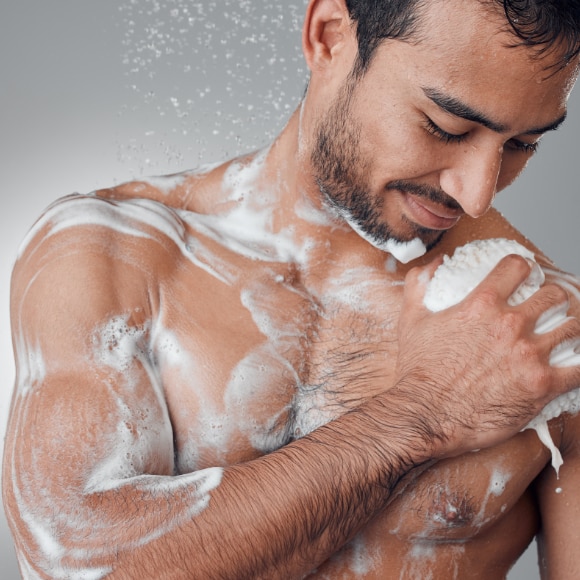
- Shower daily: Use a body wash built to target odor-causing bacteria, not just mask odor with fragrance.
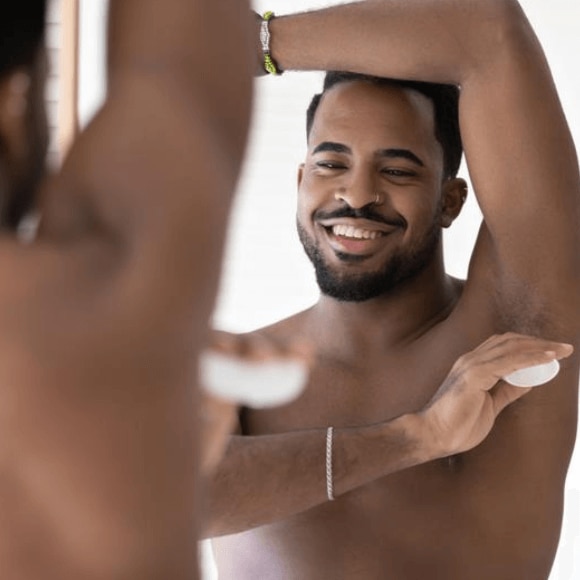
- Choose the right product for the job: Deodorant neutralizes odor but doesn't reduce sweat. Antiperspirant tackles both by reducing sweat at the source, which limits the conditions bacteria need to cause odor. Apply either to clean, dry skin after showering.
- Apply antiperspirant at night: Sweat glands are less active overnight, which gives your antiperspirant more time to work before your day starts.
- Trim body hair: Your underarms and groin are high-odor areas. Less hair means less surface area for bacteria to cling to.
- Wear breathable fabrics: Synthetic fabrics trap moisture against your skin and give bacteria the warm, damp conditions they need to multiply. Natural fibers like cotton let sweat evaporate before odor has a chance to build.
How to Get Body Odor Out of Your Clothes
Sometimes the smell isn't your skin anymore. It's living in your clothes. That's because bacteria get embedded in fabric fibers, especially synthetic and moisture-wicking materials that don't fully dry between wears.
Pre-treat stubborn odor with a vinegar soak before the regular wash cycle. Wash at the right temperature and don't overload the machine as detergent doesn't distribute evenly, and bacteria won't fully rinse out.
Always air-dry your clothes before wearing them again or storing. Damp fabric lets bacteria regrow, which is often why a clean shirt smells by midday.
When to See a Dermatologist About Body Odor
Most body odor is normal and fixable with a better routine. Here are a few signs worth getting checked:
- A sudden, unexplained change in your body odor, with no shift in diet, stress, or routine.
- Persistent, unpleasant body odor despite good hygiene. What causes this excessive body odor could be bromhidrosis, the medical term for when body odor is very strong and stubborn to address.¹ It's something a dermatologist can diagnose and help with.
- An ammonia sweat smell that doesn't resolve with lifestyle changes, especially alongside fatigue or other symptoms.
A quick visit rules things out or helps you understand what's really going on.
FAQs
Yes. Odor comes from bacteria breaking down sweat from your apocrine glands, which can happen even with minimal visible sweat, especially under stress.
Your apocrine glands respond to stress and release sweat that bacteria break down into odor, no visible sweating required. The smell is the byproduct of that bacterial process, not the sweat volume itself.
Many men notice a difference within a few days of switching to a bacteria-targeting body wash and applying deodorant or antiperspirant correctly. Dietary changes can take longer, as your body works through what's already in your system.
Yes. Stress activates your apocrine glands, which produce a thicker, oilier sweat that bacteria break down, creating body odor.
It can. Washing multiple times a day with a harsh cleanser can strip your skin’s natural protective barrier and disrupt its bacterial balance. For most men, one shower a day with a gentle body wash is enough to stay clean and fresh, although you may need to shower more often after sweating or exercising.
Body odor without sweat isn't a sign that anything's wrong. It's bacteria combined with the conditions your skin and routine create. Fix it at the source with the right body wash, deodorant or antiperspirant applied correctly, and a few habit adjustments, and most of it clears up faster than you'd expect. Your body isn't working against you. It just needs the right environment to work with you.